
Investigating and Applying Genetics: Corn Kit Manufacturer,Supplier and Exporter in India
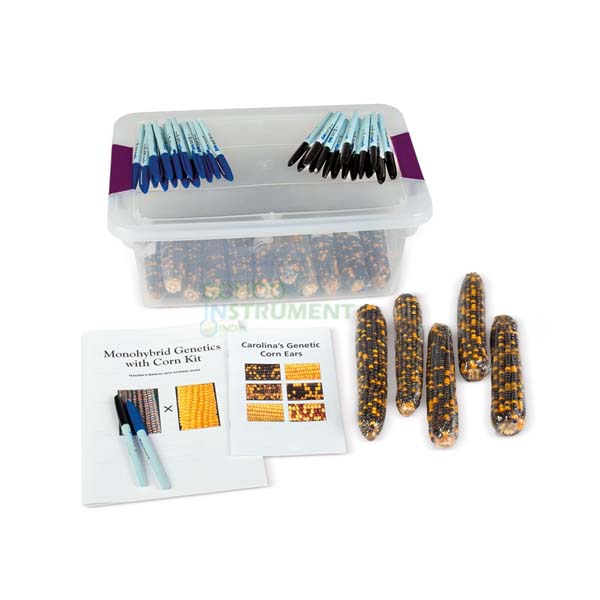
Product Code : SCL-EK-11070
Investigating and
applying genetics involves studying gene structure/function and using that
knowledge for practical purposes like medical diagnosis, personalized medicine and
creating transgenic organisms via genetic engineering for benefits like disease
resistance, better yields, and understanding heredity.
We are a premier
global manufacturer and exporter of scientific instruments and biological
models. By owning our production facilities and botanical processing labs, we
offer unparalleled benefits:
·
Rigorous Phenotype
Standardization: We control the
cultivation of our genetic corn specimens to ensure that kernel color and
texture traits are distinct and accurate for classroom data collection.
·
Factory-Direct Pricing: By eliminating intermediaries, we provide high-grade
biological materials and laboratory glassware at direct-to-institution rates.
·
Sustainability and Reusability: Our kits are engineered for longevity. Unlike single-use
alternatives, our high-impact components and preserved specimens are designed
for multi-semester utility.
Genetics Lab
Configuration
This experiment package is a turnkey solution for biology departments, providing all necessary materials for a full-scale classroom investigation.
·
Student Reach: Complete materials for 32 students working
simultaneously.
·
Modular Learning: Optimized for collaborative groups to facilitate the
analysis of phenotypic ratios.
·
Multidisciplinary Content: Includes comprehensive technical readings comparing
traditional Selective Breeding with contemporary genetic engineering (GMO)
methodologies.
Scientific Context
& Topical Authority (EEAT)
Corn
(Zea mays) serves as the ideal model organism for
studying Mendelian Inheritance. This kit allows students to observe the physical
manifestation of genetic coding in real-time.
·
Dihybrid Cross Analysis: Students investigate two unlinked traits—typically
kernel pigmentation (color) and endosperm composition (sweetness)—to observe
the law of independent assortment.
·
Phenotypic Ratio Validation: By counting actual offspring (kernels), students use
predictive modeling to compare expected outcomes with observed biological data.
·
Biotechnology Integration: The curriculum explores how modern Marker-Assisted Selection has accelerated the improvement of crops beyond
traditional methods.
Academic
and Research Integration:
·
Review the
foundational history of Maize Genetics on Wikipedia.
·
Explore advanced
research on Genetic Diversity in Hybrid Corn via Google Scholar to
understand how heterosis (hybrid vigor) impacts global yields.