Double Walled Calorimeter Manufacturer,Supplier and Exporter in India
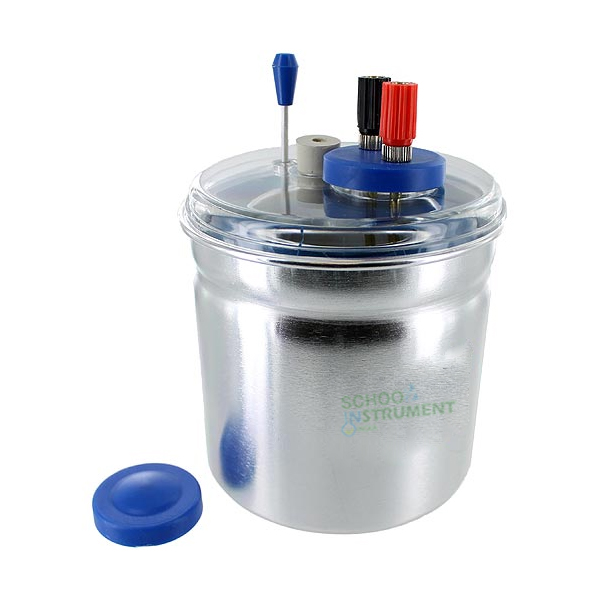
Product Code : SCL-M-11521
The Double Walled Calorimeter is a precision thermal
analysis system engineered for the quantitative measurement of specific heat
capacity and heat of fusion. Optimized for Secondary and Vocational
physics curricula, this assembly utilizes a multi-stage insulation barrier to
minimize environmental heat exchange. It complies with ASTM E288 standards for laboratory thermal vessels and
is calibrated for repeatable thermodynamic data acquisition.
Technical Specifications
|
Tender Specification |
OEM Technical Detail |
|
Material Grade |
High-purity Aluminum
(Reservoir); Molded Polystyrene (Lid) |
|
Insulation Barrier |
1.7 cm Expanded Polystyrene
(EPS) High-Density Liner |
|
Reservoir Capacity |
150 mL Inner Vessel |
|
Dimensions |
7" x 4" x 4"
(17.8 cm x 10.2 cm x 10.2 cm) |
|
Standard Components |
Insulated Stirrer,
Thermometer Stopper, Filler Cap |
Key Pedagogical Outcomes
·
Double-Walled Aluminum Configuration: Enables students to "Analyze"
thermal equilibrium by minimizing conductive and convective heat loss,
supporting Analysis of the First Law of Thermodynamics.
·
Plastic Insulator Ring: Protects the internal EPS core from liquid spills, ensuring the
structural integrity of the apparatus for Application across
multiple laboratory cohorts.
·
Transparent Polystyrene Lid with Filler Cap: Allows students to "Evaluate"
temperature shifts in real-time while maintaining a closed system, reinforcing
quantitative data synthesis in calorimetry modules.
International Logistics & Compliance
This School Instrument is consolidated for international
procurement using export-grade seaworthy crating (ISPM-15
compliant) to prevent deformation of the aluminum vessels during
transcontinental transit. Documentation provided to procurement officers
includes the Manufacturer’s Authorization Form (MAF), Certificate of
Conformance (CoC), and Laboratory Activity Guides in English. The tropicalized design is verified for operational
stability in environments reaching 45°C and 90% humidity,
with the high-density EPS core resistant to degradation in equatorial
laboratory settings.